The Disappearing Wetlands
When people think about ecosystems worth protecting, they often imagine rainforests, coral reefs, or national parks filled with dramatic wildlife. Wetlands rarely get the same attention. Marshes, swamps, bogs, and mangroves are often dismissed as muddy, inconvenient spaces that should be drained or built over. But wetlands are among the most valuable environments on Earth. They quietly protect coastlines, absorb floodwater, filter pollution, store carbon, and provide habitat for countless species. Their disappearance is not just a conservation issue. It is a direct threat to human safety, public health, and climate stability.
Wetlands act like the planet’s kidneys. As water moves through them, plants and soil trap sediments, absorb excess nutrients, and break down pollutants. This natural filtration improves water quality before it reaches rivers, lakes, and coastal areas. Without wetlands, fertilizer runoff, sewage overflow, and industrial contamination move more easily into the water systems people depend on. Communities may then face dirtier drinking water, more toxic algal blooms, and greater damage to fisheries.
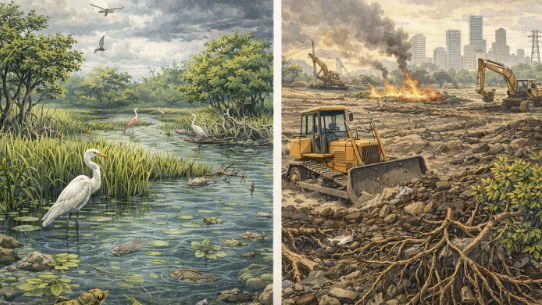
They are also one of nature’s best defenses against flooding. Wetlands can absorb and slowly release huge amounts of water during storms. Inland marshes reduce river flooding, while coastal wetlands such as mangroves and salt marshes act as buffers against storm surge. When these systems are removed and replaced with roads, parking lots, and housing developments, rainwater has nowhere to go. Floods become faster, deeper, and more destructive. In many places, the cost of rebuilding after floods far exceeds what it would have taken to preserve the wetland in the first place.
Wetlands are also powerful carbon stores. Peatlands and mangrove forests in particular lock away large amounts of carbon in waterlogged soils. When those ecosystems are drained, burned, or excavated, that stored carbon is released back into the atmosphere. Protecting wetlands is therefore not only about wildlife; it is also a climate strategy. Restoring them can reduce emissions while making landscapes more resilient to extreme weather.
The damage to biodiversity is equally serious. Wetlands are breeding grounds, feeding grounds, and migration stopovers for birds, fish, amphibians, and insects. Many species depend on the unique conditions wetlands provide and cannot simply relocate when those areas disappear. A drained marsh is not just empty land; it is the collapse of an entire living network. When wetlands vanish, the effects spread outward through food chains and across regions.
Much of this destruction happens gradually, which is why it is easy to ignore. A wetland may be chipped away for agriculture, development, roads, or tourism until only fragments remain. Because the loss is incremental, the public often notices only when the consequences arrive as contaminated water, failed fisheries, or catastrophic flooding.
The good news is that wetlands can often be restored if action comes early enough. Replanting mangroves, re-flooding drained peatlands, limiting construction, and enforcing stronger land-use protections can all help. More importantly, we need to stop seeing wetlands as wasted space. They are infrastructure, even if they do not look like concrete and steel. In an era of rising seas, stronger storms, and worsening pollution, protecting wetlands is one of the smartest environmental investments we can make.